
Billionaires, bunfights and broken hearts

Ian Sherwood
He was sipping rosé on the pontoon at the end of a long, hot day at the Cannes Yachting Festival when a young deckhand approached the Burgess stand asking for a chat.
Ian Sherwood, a sales broker, volunteered to talk and the crew member explained they wanted to move ashore but couldn’t decide between a career in sales or charter.
Sherwood called over a charter colleague and asked her if she had ever considered sales. “I could never deal with the endless crushing disappointment of being a sales broker,” she replied.
Sign up for the Superyacht Investor newsletter
It is a point of view, but sometimes the lows are offset by soaring highs. This year already, Sherwood has sold the 89m (292ft) Amels flagship Here Comes The Sun plus two other yachts.
“The problem with brokerage is it’s very difficult to predict when and where things will happen,” Sherwood tells SYI.
He adds: “This time last year everyone was really nervous.” He had a “good yacht” at the Palm Beach Yacht Show but despite decent footfall nobody was buying, perhaps mindful of erratic economic and political factors.
“From Q3 onwards last year there was a very different shift in the market,” he says. “We took Here Comes The Sun to Monaco and it was just a bunfight for four days. For every client visit we were turning away three.
“We had multiple offers from a good geographical spread. I don’t think I’ve been involved in a boat where we’ve had so many offers in such a short space of time.”
Curating the list of possibles allowed to visit the yacht was an exercise in diplomacy and decision-making. But given the asking price of the yacht was €165m, Sherwood’s position as the owner’s broker was “quite clear”.
“You can make some assumptions,” he says. “Red flags include first-time buyers or owners with existing yachts of about 30m. You’re probably not buying that boat if you have a net worth of €1bn; you’re buying it if your net worth exceeds about €10bn.”
According to the buyer’s attorney, Bob Allen of Robert Allen Law, the deal was conducted across multiple borders and closed in international waters off the coast of Barcelona, Spain.
“For the ultimate buyer it was very quick and smooth,” adds Sherwood. “He’s not a first-time buyer and that quite quickly makes a huge difference.”
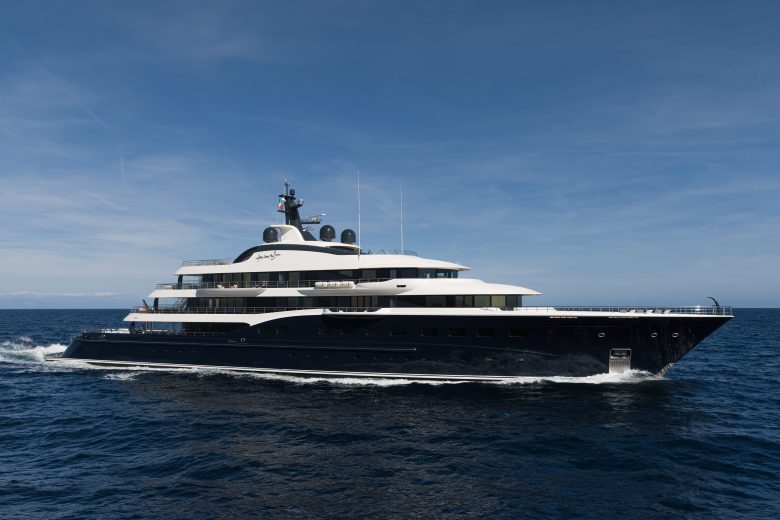
Here Comes the Sun, a 89m Amels, was sold in January,
But five out of Sherwood’s last eight deals have been with clients new to owning yachts. He says the industry needs to be “better at recognising the value of a first-time buyer” to boost growth.
“As well as finding them the boat, it’s finding the support team and the infrastructure around them so that this doesn’t just become another headache in their already busy lives,” he says.
In a busy few weeks, Sherwood has also represented a first-time buyer in the purchase of the 42m vintage Feadship Gin Tonic, the culmination of a lengthy journey with a client keen to move from charter to his own programme. And he completed an off-market deal for an experienced owner he began talking to in January 2025.
“It’s quite a powerful thing as a broker and reassuring for clients when they hear wheels are turning,” he says. “Who wants to eat in an empty restaurant? People are drawn to activity.”
READ: ‘Do you even want the yacht?’ broker-turned-owner Pitasso’s epiphany
Sherwood’s first steps in yachting came when he moved with his wife to Sydney, Australia following nine years in the British Army. He landed a job as a broker selling small recreational yachts and day boats.
“I sold normal boats to normal people,” he says. “I didn’t know what Feadship was. But I gained a huge amount of transactional experience. The trick to selling anything is finding where the leverage is. Often the best learnings come from when you’ve messed something up.”
Sherwood had to sell more than two boats a month just to pay the bills. In his last year in Australia, he sold 32 boats.
“Pressure is when your wife has just had a second child and you’re a commission-only, single-income household in a really expensive city,” he says.
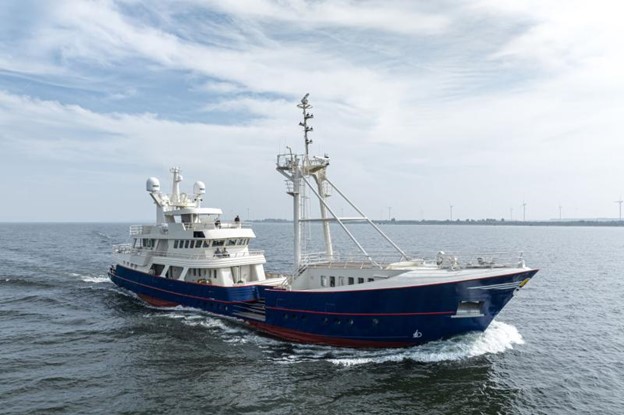
Ian Sherwood is representing the seller of the explorer yacht Scintilla Maris.
Moving back the UK in 2016, Sherwood joined Burgess with “no pressure” to deliver results, just a mandate to learn.
The first deal he sourced on his own was representing the buyer of Fair Lady, a 1926, 36m Camper & Nicholson yacht, a “beautiful museum piece”. Sherwood’s first sizeable boat was the 74m Amels New Secret, in what felt like a landmark moment for him until he was quickly overshadowed.
“It wasn’t even the biggest boat Burgess sold that day,” he says. “I was gazumped by one of my colleagues about two hours later.”
READ: Hot or not? Forecasting markets in 2026
Moving into the rarefied air of the superyacht industry, Sherwood was able to lean into his military background.
In his final job in the army, he was part of a specialist team tasked with regularly briefing very high-ranking officers about the evolving picture in theatres such as Iraq or Afghanistan.
“I don’t really get nervous talking to big names,” he says. “It could be quite daunting if the founder of generic American tech company A phones you up and says they want to build a boat. You have to be able to talk to the client as well as the people in your team. I have the army to thank for that.”
But dealing with ultra-high-net-worth individuals, he notes the sales psychology is slightly different.
“I sadistically quite enjoy it, but it’s more of a game in this environment,” he says.
“Many of the yachts we’re talking about, you can probably say the owner could financially be able to give away the boat for free and the buyer could probably pay double the asking price. So if money isn’t the driver, then what is?”
‘Taking a haircut’
Billionaires, he suggests, still need to find value in a deal, but they are often less fixated on the final number.
“The perfect boat could be 60m or 90m; the most important thing is finding the perfect boat rather than the perfect price,” he says.
A client recently proposed making an offer significantly above the expected market value to secure his dream yacht. Sherwood had to explain that meant he would almost certainly “take a haircut” when reselling it. “If it’s the perfect boat, you have to understand this is a decision your heart is making not your head,” he told the client.
“If you’re happy with that, I’ll make it happen but I can’t not tell you this just to have a nice Christmas.”
Sherwood insists it’s more important to earn the trust of a client and do three deals with them rather than “one and gone”.
“My job isn’t to force people against their will or trick them with smoke and mirrors to try to manipulate things, my job is to work for the client, advise them and pull in their direction,” he says.
“I won’t be the guy they call when they need a fourth for a round of golf. All I can hope is that when the client thinks about a boat, they think, ‘I’m going to call the guy with the beard who seemed to know what he was talking about’.”
READ: Skeletons in the hull: Pendennis’ Ross on risk, unknowns and bumps in the road
Alongside yacht industry expertise and financial acumen, brokers also need a dose of luck. Sherwood explains how he once showed a client around a boat which met all of the requirements. The response was lukewarm at best, and he came away bemused at how he had missed the brief.
A few weeks later they agreed to see three boats in one trip in the south of France and then another in Croatia. The final decision was that the first boat was perfect. But by then it had gone under offer.
“It was a classic case of me knowing exactly what they wanted, but the timing wasn’t right for them. It was very frustrating,” he says. Had the sequence of viewings been different he thinks they may have offered on the first boat.
“The order in which you look at boats is vitally important, especially at shows,” he adds. “It’s not an accident the last boat we look at before lunch is the one I think is the really good option. It then tends to dominate the conversation over lunch. And if I think you’ll be short on time I won’t put the best boat last.”
Reflecting on the chat with the young crew member, Sherwood admits he doesn’t think about the trials of the job too hard.
“If I did, I’d realise there must be an easier way to make a living,” he says. “If every lead and every sale came off, I’d own a yacht, but I don’t.
“There is a high level of attrition, you have to not take it personally.”
Subscribe to our free newsletter
For more opinions from Superyacht Investor, subscribe to our email newsletter.
