
‘Patience’ the key to unlock Middle East bounty
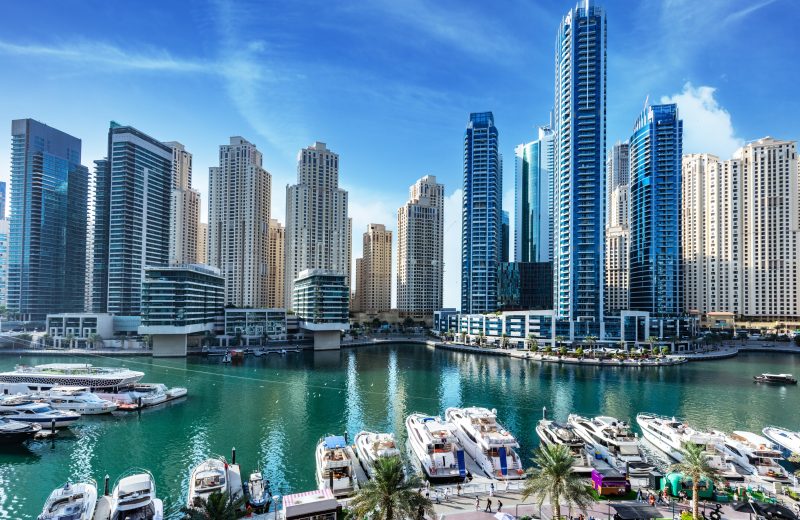
Dubai has become a key player in yachting in recent years.
In football terms, they supplied the cross, Dubai headed it in.
Unfavourable or uncertain tax regimes in countries such as the UK and France are triggering a mass migration of wealth, with millionaires and above seeking sunnier fiscal climes. Dubai, with its already favourable environment, has recently announced the largest budget in its history, making an already attractive proposition even more appealing.
For the superyacht market, this combination of growing expat wealth in Dubai and local money across the rest of the United Arab Emirates and Saudi Arabia is expanding an already burgeoning sector.
“Over the last 12-18 months at least half of everything we’ve touched has had a Middle East element to it,” says James Jaffa, founder of law firm Jaffa & Co, which has recently opened a base in Dubai.
Sign up for the free Superyacht Investor newsletter
Monaco-based Broker Mathieu Bardon, managing partner Europe, Worth Avenue Yachts adds: “The strongest markets today and the safest are the US and the Middle East.
“You have so much uncertainty in Europe at the moment, especially in France. Everything about the tax situation is not easy.”
A 2025 wealth migration report from Henley & Partners forecast the UAE would gain about 9,800 millionaires and about $63bn in capital. That is as a result of high-net-worth individuals seeking safety, more advantageous tax arrangements and welcome benefits such as its Golden Visa programme. That’s compared with 7,500 moving to the US and 16,500 leaving the UK. The report was released before the latest UK Budget.
November’s record $29bn Dubai budget announced amid a wider UAE spending plan signals the region’s growing ambition.
“Saudi has phenomenal wealth but it’s still Dubai which is inviting foreign wealth and investors and is accelerating away from the other regions,” adds Jaffa. “An Abu Dhabi client or a Saudi client will meet you in Dubai because it has the best restaurants and is the most cosmopolitan.”
For lawyer Ezio Dal Maso, partner, Stephenson Harwood, Dubai’s openness is the key, as is its access to other nascent markets such as India.
“Dubai really is the hub we believe in because you have all the elements you need for transactions to close. It’s very international, open to tourism, you don’t need special authorisations to go there,” he says.
While most yacht purchases from clients in the Middle East are for use outside the region, an increasing number are staying put. Dal Maso has an Emirati client who is building an explorer yacht in Italy with the intention of keeping it in Dubai to access locations such as Mauritius and the Maldives.
“Every time I go to Dubai, I see more yachts there,” he says. “What is important is to ensure that the capacity follows the demand.”
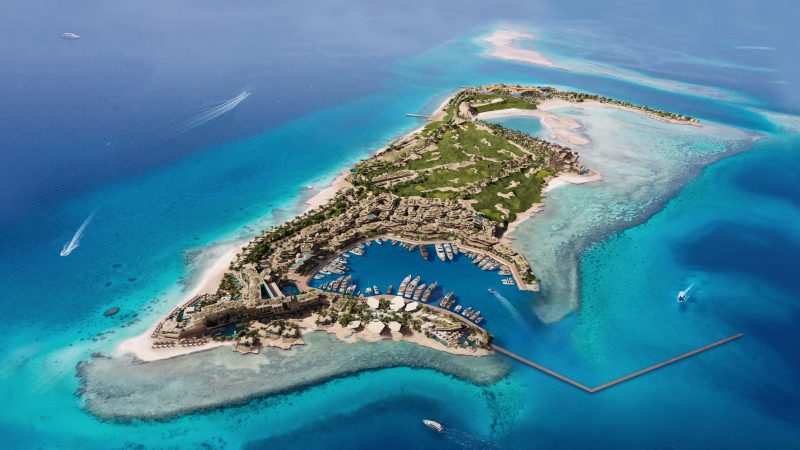
Sindalah is a development in the Red Sea off Saudi Arabia.
If Dubai is the brightest star for yachting in the region, Saudi Arabia is often touted as the next big thing.
Proponents point to the seemingly limitless wealth, the attractions of the Red Sea and a host of vast infrastructure projects, including the Sindalah luxury island resort, as part of the Kingdom’s Vision 2030 project to diversify the economy away from a reliance on oil. It remains to be seen, however, whether some of the schemes will materialise as planned.
Stephenson Harwood has opened offices in Riyadh and Al Khobar to service what it calls “a market full of potential and opportunity”, especially in the larger yacht segment.
Dal Maso recently advised the buyer of a 72m Benetti, the 28-year-old Saudi businessman Abdullah bin Mohammed Al-Rajhi who is the founder and chairman of Half Million Coffee Company and Details Real Estate Company.
He says the client plans to bring the yacht to the region and says it will send a message to others.
“It is important for the owner and for the yachting community that this yacht will go to the Red Sea to show that not only the infrastructures are there, but that yachts are moving to this new destination,” he says.
Watershed
Bardon believes the options for yachting in Saudi are still “limited” but says its location compared with Dubai — close to the Mediterranean and away from high-risk zones such as the coast of Somalia — could be something of a trump card.
“It’s not there yet, but it might get to that point,” he adds. “There is room for growth, especially for Saudi people buying and using outside of Saudi.”
But Jaffa does not foresee a “massive boom” from the Saudi market, even though the wealth report suggests an influx of 2,400 millionaires, both returning nationals and foreigners.
“I’m sure there is a generational wealth shift coming and [the yacht market] will keep developing, but not at same rate as other places. The whole world is heading to Dubai,” he says.
“Saudi is a good, solid customer base but I don’t think we’re on the precipice of a watershed moment.”
Two ends of the spectrum
What is certain is that adapting to local cultures and ways of working are key to getting ahead in the Middle East.
“At the top end it is difficult to determine who truly has wealth or who has the decision-making powers,” adds Jaffa. “Once you find them, if they trust you, they will give you a chance, but you have to wait to be invited into the true inner circle.
“If you push, they will pull back and it creates distrust very quickly. It’s a region that takes patience.”
Generalising, he says there are two different faces to local Middle East clients. On one side they can demand everything is done immediately, while on the other, decision-making is, by European or American standards, “incredibly slow”.
“It’s two ends of the spectrum and nothing in between,” he says.
Different culture
Bardon, who spends a considerable amount of time in the Middle East, says it is often a “long game” but suggests “when they’re ready, you need to be ready”.
“The Middle East is so much relationship based as a business. You don’t need really an office. You need to have good contacts,” he says.
“You need to get the trust of the people. And then they will recommend you to other people.
“In the UAE, they will invite you to do meetings, perhaps discussing €30m projects, in a coffee shop in the middle of the mall, which would never happen in Europe. It’s just a different culture and it’s important to understand how it works.”
Dal Maso believes winning the business of the Benetti client was as much down to Stephenson Harwood’s cultural connections as its yachting expertise. He points to an award the firm won for an Islamic finance deal in the shipping sector.
“It made a difference in that the owner perceived us not just as pure yachting lawyers, but also very close to the culture and the way to do business that they have in Saudi,” he says. “This was a key element of success for us.”
Back of the net.
Subscribe to our free newsletter
For more opinions from Superyacht Investor, subscribe to our email newsletter.
