
Last of the new Heesens: on frustration, recalibration
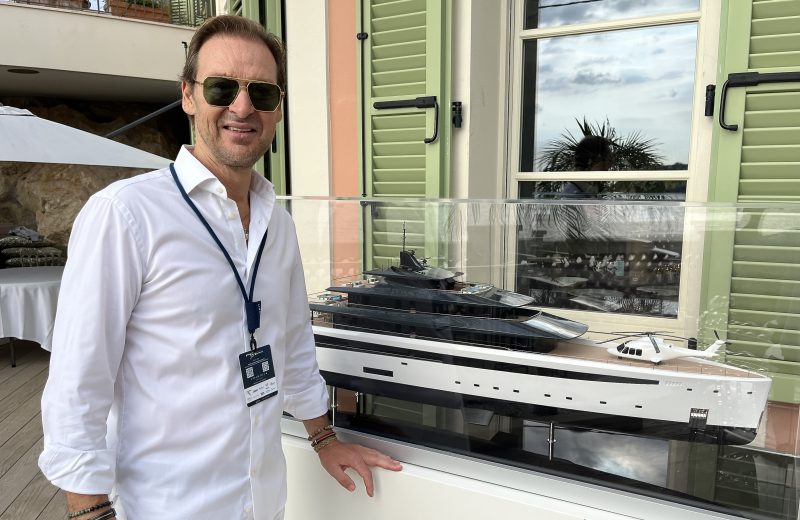
Heesen owner Laurens Last with Project Ananda during the Monaco Yacht Show.
He bought a shipyard but he is frustrated.
Not with the purchase but because of the time it will take to see some of his vision become reality. Heesen owner Laurens Last bubbles with vitality as he riffs on kitesurfing with sharks and plans to install hyperbaric chambers onboard to help with longevity, the new buzzword in yachting.
But his vigour is not matched by the typical pace of building superyachts.
“I think that’s why I’m so frustrated,” says Last, speaking at his home in Roquebrune-Cap-Martin during the Monaco Yacht Show.
“I can’t wait for our new yachts to come on to the market, because then the industry will see, and hopefully say, ‘Wow, what they have done there is really unique.’”
SIGN UP for the Superyacht Investor newsletter
The Dutch packaging entrepreneur acquired Heesen Yachts in April 2025. Working closely with new CEO Jeroen van der Meer, the goal has been to restructure, recalibrate and reignite the brand. This includes installing Last’s son Lyam as sales manager in a new Monaco office and appointing Sip Halbertsma, formerly of Feadship, to lead Heesen’s push into the US.
“After restructuring, it’s time for investments, for innovation,” says Van der Meer. Referencing Heesen’s 72m Project Ananda, set for delivery in 2030, he suggests the vessel demonstrates the renowned Dutch brand’s “ambition and capabilities of the art”.
Product innovation inside the yacht to “enhance owner experience”, investment in new production technologies and leaner manufacturing processes are all part of the journey. “We have ambition. There’s a lot of work to be done,” adds Van der Meer.
To define the new era of Heesen, focusing on “human, health and happiness”, the “proof will be in the pudding”, according to Last.
Standing in front of a model of Ananda, Last says: “Branding needs to be authentic, otherwise people will not buy it. Your product needs to represent what you stand for. I even said that to our marketing department. I said, ‘Listen, we need to wait to create the image [of the company], until we are standing behind it.’”
Feedback is key
Heesen has three other yachts in build for delivery in 2027 and 2028 and plans to continue building speculatively, focusing on hull engineering and ship system completion. But the team are “fine-tuning” a hybrid model known as “smart custom” where the client can adapt the superstructure and have a “strong influence” on the personalisation and customisation of the yacht. This will lead to a shorter time to market, with a yacht available in less than two years from ordering, according to Van der Meer.
One of the reasons for pushing into Monaco and the US is to be closer to brokers, owners and the industry, according to Lyam Last.
“We see that clients want more personalisation throughout the whole sales process,” he says. “So we’re not just selling them the yacht, we can actually follow them through. Also, we get to catch trends earlier. So, for example, there’s more focus on wellness or connectivity to the water or longevity.
“Take Project Ananda – it’s all broker feedback, captain feedback, crew feedback, client feedback. Now we just need to sell her.”
According to his father, deeply understanding what buyers want is a key component in penetrating new markets. “Probably 50% of the new billionaires want to be inside, they don’t want to be in the sun. But we’re all building yachts with all this outdoor space,” he says. “And some Chinese people might be attracted to yachts with casinos, but at the moment, there are no casinos.”
As part of that feedback loop, a group of Heesen engineers went on a four-day voyage from Malta to Gibraltar on Last’s own yacht to experience situations in real time, a practice the team says will continue.
“We’re very fortunate now,” says Mike Rouse, captain turned Heesen’s strategic advisor. “We have a passionate yachting family that loves boats. We have operational knowledge in the yard, which we can improve and optimise from the very start of the process to build the best, most efficient boats. These are easier to maintain so the crew can give a better experience to the owners. And the relationship doesn’t end when the yacht leaves the shipyard.”
‘Strange to me’
For Laurens Last, the learning curve of buying a shipyard has been steep but he is relishing the journey.
“I learned a lot over the last year and probably I’m going to learn even more next year,” he says.
Because of the “pressure” of selling the yacht, the tendency is to move too quickly from product development to engineering to manufacturing without finishing every phase “very well”, he says.
“That’s what I have experienced, which results in failures in the process and hence makes the yacht less good or increases the cost because of the inefficiencies,” Last adds.
“What you see in other industries is that the process is a little better defined and that’s one thing I want to bring to yachting: more discipline in the execution of a certain phase and finishing the four phases in order – product development, engineering, production and then after sales.”
He also thinks yachting could be more “open” in collaborating with suppliers over innovation. “It is strange to me, because in my industry we had a lot of joint development projects with your suppliers,” he says. “In this industry, it doesn’t work right now.”
But while he believes yachting needs to deal in more objective information, particularly given how prospects are turning to AI for research – “I use AI for almost everything. Not that I’m lazy, but I’m very curious” – he stresses the importance of a holistic view to yacht building.
“Innovation and efficiency are the DNA. But at the end of the day, we’re building a dream, not just a yacht,” says Last.
