
Dubai will ‘lick wounds and bounce back’
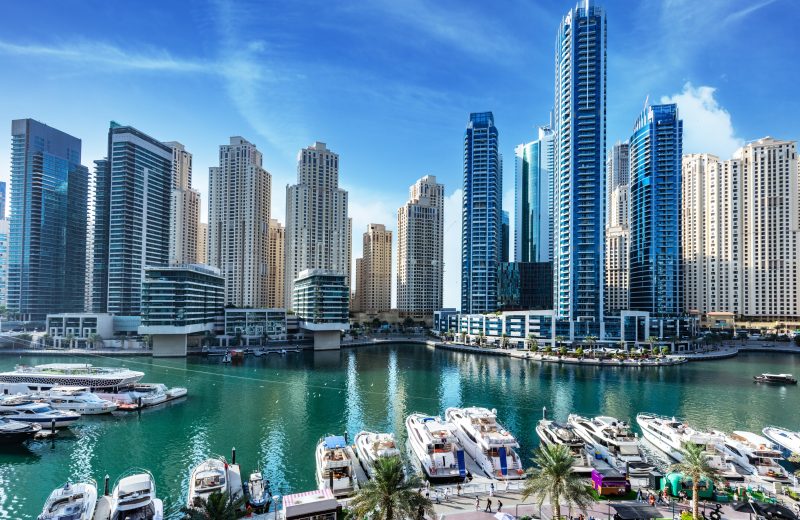
Dubai has become a key player in yachting in recent years.
He describes the missile interceptions as like “very, very loud thunder”.
Menelaus Kouzoupis, partner at Stephenson Harwood in Dubai says life under the ever-present threat of Iranian missile and drone strikes in response to US and Israeli attacks is “surreal”.
“We are living with multiple missile and drone alerts every day,” he says. “We’ve got used to the phones going off. Today they went off at five in the morning, followed by loud booms.”
With Dubai’s financial centre largely closed, Kouzoupis looks out of his apartment window over the marina and notes that every single yacht is tied up despite the public holidays to mark Eid al-Fitr at the end of Ramadan.
“There’s very little action on the water,” he says. “Normally, you’d be looking out and seeing the water covered in yachts. Around this time, you’d normally have superyachts arriving, getting ready for the boat show, getting ready for the Bahrain GP.” The Dubai International Boat Show has been rescheduled for November, while F1’s Bahrain and Saudi Arabia races were cancelled because of the war.
Sign up for the Superyacht Investor newsletter
Kouzoupis says Dubai is a city which “prides itself on luxury and safety”. “Suddenly, the stability has been shaken,” he adds. “Obviously, the immediate impact on the UAE is effectively an impact on visitors to the region.
“The government has done a really good job in terms of interceptions and life goes on pretty much as normal. But it’s not exactly normal.
“The other day I went to a well-known restaurant, a place you normally have to book months in advance. We just turned up in the morning and it was much quieter than normal. You don’t think anything’s going on until you hear F-16s flying above you.
“You get used to seeing jets, hearing interceptions. I’m quite robust but everyone takes it in a different way. For some people, it’s affecting them badly.”
Last piece of puzzle
The impact on the superyacht industry is initially one of perception, says Kouzoupis.
“The last five to 10 years have seen huge investment in infrastructure around the Gulf, in particular in tourism and high-end luxury,” he adds.
“We’ve got the marinas, we’ve got facilities. There’s been a lot of progress in terms of a regulatory position to make it easier to charter. What was missing really, the last bit of the puzzle, was just the itineraries.
“Now that’s all heavily impacted. As it stands, about 3,000 vessels are stuck in or around the Gulf. I can’t see any yachts moving any time soon, in or out.
“It’s not the end of Dubai or the Middle East by any means, but every week this rolls on, it’s going to delay the inevitable rebound. It’s in everyone’s best interest in the Gulf for this to end as quickly as possible, not just for safety’s sake.”
Ezio Dal Maso, head of Stephenson Harwood’s superyacht team has a number of Middle East clients with yachts nearing delivery from yards in northern Europe.
“After their first season in the Med, they were planning to move the yacht to the Red Sea and then to Dubai. These plans are likely to be at least paused for some time,” he says.
On pause
Alongside the war risk to the vessels, insurance costs will be “eye-watering”, says Kouzoupis.
“Three weeks ago insurance costs would have been 0.01 to 0.05% of the whole value of a yacht. It will now be about 2% of the whole value.”
According to lawyer James Jaffa, founder, Jaffa & Co yacht onboardings from the region are “largely on pause”. Yacht broker Mathieu Bardon, managing partner Europe, Worth Avenue Yachts, says the Middle East market has “considerably slowed”.
“Clients are definitely pausing their yachting projects for the moment,” said Bardon. “On the professional side they are cautious. I even invited clients to come for the Monaco F1, but they said let’s see what happens, we can’t make plans.
“The end of March will be decisive for the season; if the conflict continues it might bring some tensions to the charter and sales market.”
However, Erwin Bamps, CEO of yacht builder Gulf Craft, which has a main base in Umm Al Quwain, UAE, said operations are continuing as normal across its facilities and day-to-day activities.
“While the evolving regional situation has created some logistical and shipping challenges, our teams are actively working with partners to manage schedules, adjust routing where required and maintain delivery and service continuity for clients,” he tells us.
“The UAE government has been effective in reassuring businesses and the wider community, and we are aligning with relevant guidance as it is issued.”
Unless the war takes a drastic turn for the worse, Jaffa suggests the Middle East as a yachting market will bounce back “regardless of whether the conflict is resolved quickly”.
“Things will either settle down politically, or clients will get bored with waiting, and will go back to buying,” he says. “We had it with Covid. It is turning into quite the pattern. I’m not worried for the long term.”
Can-do place
According to figures from residence and citizenship advisor Henley & Partners at the recent Superyacht Investor London conference, the UAE received the biggest inflow of millionaires and centi-millionaires in 2025, owing to its immigration policies and perceived safe-haven location.
Reports suggest about 100,000 Britons alone have left the UAE since the start of the conflict, but Kouzoupis suggests the world has a “short memory”. And he says further incentives may be introduced once the situation is over to restore the region’s standing among the world’s wealthy.
“What I do know about the region is they will lick their wounds at the end of all this and they will consider what they need to do to get things back on track. It’s a can-do place,” he says.
“It won’t all just bounce back in a week, but by the end of the year, I think we’ll be back to kind of almost normality.”
He highlights what he calls “a Dubai solution to the Dubai problem”. As a padel player, his usual courts are in a student area near a street food market. But because it is close to the Dubai police academy, which could be a target, the courts are closed. Instead, the authorities have authorised the use of the courts at the Mandarin Oriental.
A few days ago when he was playing padel, the alerts went off, followed by some loud bangs. Kouzoupis and his partner just shrugged and carried on with the match. “That might give you an idea of the absurdity of the current situation,” he says.
“What’s weirder is how quickly you adapt; this idea that you’re in a war zone but it’s business as usual.”
Subscribe to our free newsletter
For more opinions from Superyacht Investor, subscribe to our email newsletter.
