
How fluent are you in family office?
She describes a yacht as often 1% of a family’s assets but 90% of its enjoyment.
For a family office, this throws up a unique challenge. There might be more pressing business imperatives, but you can’t put a price on emotions.
“It’s joy, happiness, experience and family being together, cocooned in one space,” said Carmen Lau Stratton, senior advisor for Camper & Nicholsons on a panel highlighting the role of the family office at our Superyacht Investor London 2026 conference.
“Although it is 1% of the assets, it’s probably that rare 1% they can touch, experience and feel.”
Sign up for the Superyacht Investor newsletter
Nic Arnold, UK head of JTC Private Office says a single family office can be anything from a “one-man band”, sometimes the principal’s old school friend or trusted advisor, to a 60-person office managing an investment portfolio as well as assets such as houses, yachts, jets, art and philanthropic projects. That’s alongside the children, animals and other areas of family life.
She explained how she once took over running a family office from a gentleman who had come via the classic route of being the principal’s business adviser. But he had become the “most exasperated person on the planet”, she told the panel.
“He was expecting to run it as a small business, but the bit he hadn’t actually counted on was the fact that the family didn’t make any rational decisions when it comes to this asset class,” she said. “It’s always going to be an affair of the heart, so that’s something to focus on.”
Speaking the language
Felicia Andjel, chief commercial officer at Kitson Yachts, first worked for a family office in 2010 during the construction of a 50m Rossinavi. At the end of countless gruelling working days for the team, she would often get called in to see the principal.
“We’d have a discussion about the yacht and you could just see the weight lifting [from him] because of his enjoyment of the process and the experience of building this yacht,” she said.
“So although it might be a small component of the portfolio, it’s a very important one for the principals.”
Learning how to “speak the language” of the family office, the title of the panel, is crucial for building trust, understanding the dynamics at play and working efficiently with the entities, agreed the speakers.
“We’re seeing a migration of expertise into family offices and that will only progress as the years go by and family offices get more established,” added Andjel.
Robbie Winders, general manager operations across aviation, marine and high-end residential for a prominent family office, told the panel his role was to be a “jack of all trades”.
“That’s why we need the support of all these people out here [pointing to the audience],” he said.
“It’s just about managing that and making sure that the family get the best value for money and the best representation on everything.”
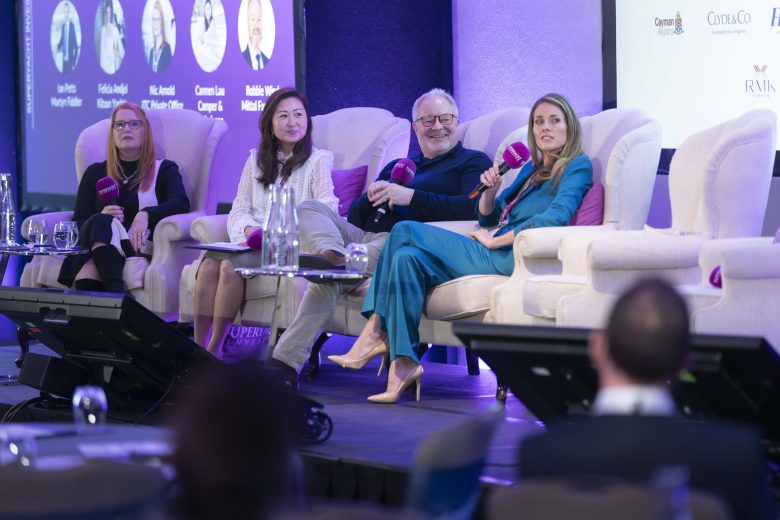
‘Speaking the language of the family office’ at Superyacht Investor London 2026.
‘More realistic’
Panel moderator Ian Petts, an adviser with Martyn Fiddler, said one family office he worked for “literally counted the amount of money they spent on Snickers bars, on the fuel of the cars, right down to the micro level”.
“At the big picture [level], whether the yacht costs €5m or €7m, they were not interested, but they wanted to see the control on the management of the boat,” he said.
Arnold agreed that owners might conduct “more forensic analysis” when they realise the invoices are piling up.
“None of our clients have got rich without applying some attention to the financial detail, and they will always come back to that,” she said.
To avoid future headaches, she advised being “more realistic” over costings from the outset.
“Say, we’re going to give you the best experience you can get, but this is an expensive asset,” she said.
For Andjel, budgets are fragile and liable to be “blown to smithereens” by any number of intangible factors.
“You can do the best projections in the world and then an owner’s friend comes along and obliterates all of the information that you’ve so carefully structured with one comment in St Tropez,” she said. “They might have over-exaggerated how little they’re paying for their crew or their management or whatever it might be.”
Winders suggest there is a “huge creep” in costs for yacht ownership, such as crew pay and terms, berthing fees and other payments.
“There’s just all these hidden costs coming in which will eventually make yachting undesirable because the value for money back to the owner is like, is it worth it? Why not just rent an island?” he said.
Generational wealth transfer
A significant challenge facing family offices, which the rest of the industry must be mindful of, is the generational transfer of wealth.
Arnold suggested the yacht portfolio should be carefully considered when talking about succession and family governance.
“We all deal with clients who have spent a lot of their energies creating wealth, but it is the balance between the creation, the protection and the consumption of that wealth,” she said. “It has the ability to be toxic and destroy.
“It comes down to human beings and how equipped that human being is at looking at the wealth beyond just how brilliant they were at creating it in the first place.”
In terms of how the yacht “flows through the generational chain”, there are often issues with beneficiaries not being prepared for the ongoing costs, said Petts.
“Daddy didn’t tell them that it costs $5m a year and then they do the survey and it’s $7m,” he added. “It’s now, are we going to keep the yacht or not?”
Arnold cites the example of one family who were at odds because some resented what the deceased father’s yacht stood for. Others thought they should keep it to honour his legacy. What could have turned into a major issue was turned around when the mother suggested that now they could take their pets onboard.
“It really bonded them,” she said. “At least they were looking at the yacht through a different lens by the time they got to conversations around money.”
‘Up their game’
Andjel believes one of the keys to being successful within a family office environment is having the “social or emotional intelligence” to know who the right decision-makers are.
“I always use the joke – semi-joke – that half the job is doing the job and the other half is the politics of navigating the family,” she said.
“And never underestimate how much influence those younger generations have, particularly since Covid.”
Summing up, Winders suggested the 24/7 nature of a yacht makes it a much more complex asset for a family office.
“Even when the family are off, it’s still working,” he said. “An aircraft, you land somewhere, you turn it off and that’s it.
He added: “The hardest thing to manage is expectations.”
For Arnold, the key takeaway is that as family offices evolve, the yachting ecosystem must “up their game”.
“Understanding that they are becoming quite sophisticated institutions and they’re going to be asking more questions and holding the industry to account is probably one of the biggest messages to leave with,” she said.
Subscribe to our free newsletter
For more opinions from Superyacht Investor, subscribe to our email newsletter.
