
Why new-build finance and Vinted are alike
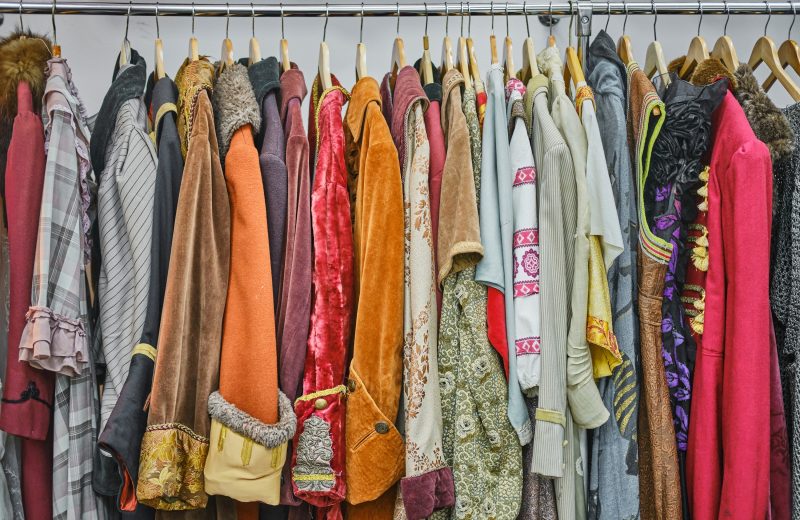
Teens and other skinflints (or canny recycling fans, depending on your perspective) are fond of “pre-loved” clothing platforms like Vinted.
Zebra-print trousers and a pink velvet smoking jacket can be snapped up at laughably low prices. The platform adds a small buyer protection fee to safeguard your £3 metallic green shirt purchase.
It’s not that you can’t afford those knockdown gold and rhinestone stilettos (although you’ll low ball because who doesn’t want to win?), but the protection adds an extra layer of comfort as you wiggle around the room in your new snakeskin strides.
And it’s exceedingly similar (or very different, depending on your perspective) to the financing of new-build superyachts.
“Our clients don’t need the finance,” said Marsha van Buitenen, sales director, Feadship, speaking at our Superyacht Investor London conference.
“Looking back over the past 10, 15 years, I’ve maybe seen one client on our side who said they need finance, who doesn’t have the liquidity or the net worth to do so.
“So there have to be other reasons why they do finance the boats.”
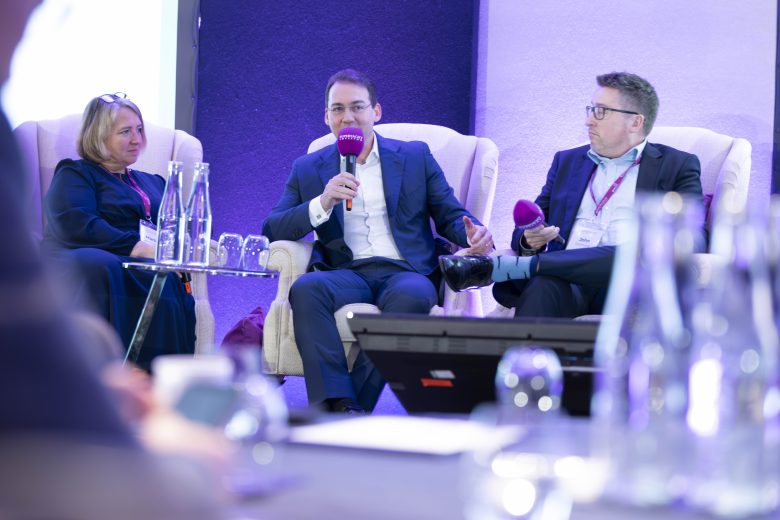
Steven Hawkins, MD, JP Morgan Private Bank discusses construction finance at Superyacht Investor London.
Splitting superyachts into two “distinct markets” – 30m to about 60m and then vessels above that – John Stephens, co-founder JB Capital and now MD, Reckoner Capital Management suggested different motivations are at play in the different segments. But he added that even for smaller yacht builds which cost less, finance is in demand.
“Even in that area, most clients have the necessary means and liquidity to be able to fund a new construction,” he said. “They choose not to. Why? It’s that opportunity cost of capital.”
Stephens suggested ultra-high-net-worth individuals often have up to a quarter of their investments in higher-risk private equity.
“The returns they’re looking for on those types of investments are about 15-25%,” he said.
“Will a client sell those investments to provide liquidity, to pay a number of milestone payments for a yacht over three or four years? It doesn’t sound overly attractive when they can make a significantly better return elsewhere.”
WATCH: The rise of construction finance at Superyacht Investor London
For Steven Hawkins, MD, JP Morgan Private Bank most of his yacht construction financing is at the larger end, not because the bank has more appetite for that segment but because “there are more levers for a client to pull for a smaller yacht”.
“We’re working with our clients to facilitate their long-term objectives, which involves liquidity planning,” he said.
“So if we’re talking about a €200m build, you’re going to have a much bigger conversation about liquidity, and what are the consequences if you access that liquidity from elsewhere on your balance sheet versus utilising the bank, as opposed to if you’re doing a €10m build accessing €5-10m from a balance sheet. There are going to be a lot more options that are maybe more convenient than putting in a structured yacht construction financing.
‘Pre-baked cake’
Another important consideration is that bringing in a bank adds a layer of security, according to Christopher Anderson, partner, Robert Allen Law.
“Certainly in the middle market, having construction financing involved does yield a lot more protection for the buyer,” he said.
Panos Pourgourides, partner and head of Superyachts at Hill Dickinson added: “The buyer invariably does have the money, but the bank will bring something else, a level of rigour to the finance side, the way instalments get invoiced and paid. And done properly, the bank is hopefully partnering with you and isn’t just a source of liquidity.”
Where financing is used, it seems to be rarely part of the initial discussion, according to Pourgourides. And coordinating the builder, the buyer and now the bank is where things get interesting.
“The challenge can be trying to bring three parties together, with an existing contractual framework between the buyer and the builder that the bank is then coming in and trying to secure itself against,” he said.
“Once the buyer’s primary collateral is titled to the hull under construction, that’s where you have to mesh all of those … everyone has a common interest in the hull. That’s the challenge for us.”
READ: What would Maverick do? Why auctions could be an ace trick
By the time Hawkins gets involved, build contracts are often already signed – a “pre-baked cake”, he said – so any collateral he can get from the contract is “additional comfort”.
“The more protections the borrower has built in, the stronger that collateral is,” he added.
“And therefore, possibly the better the terms we can give to the client: the loan-to-value might be higher, the pricing might be better. Covenants might be less rigorous.
“So this is where it is a partnership. The banks and the shipyards are very much aligned in providing a service for the client. No one wants a protracted negotiation about the nuances of who gets to call something in a contract that the UBO is probably never going to read.
‘Performance risk’
A financier’s decision to move forward owes a lot to an analysis of the performance risk of the yard, added Stephens.
“How many yachts have they delivered? Have they delivered on time? What is the financial health of that yard? Because performance risk is kind of everything,” he said.
“If something goes wrong, can that yacht be sold quickly out into the market? There is probably a stronger market to move the slightly smaller yachts on than perhaps a very, very large build where there will be a decreasing number of people that could actually afford to acquire a boat like that or even choose to.”
READ: Stalking Staluppi – why Project Bond is Bilgin’s licence to thrill
Like all reputable shipyards, Van Buitenen said Feadship vets its clients “quite significantly”, aided by the fact that many are “well-known people with a public net worth”.
“So you have that kind of guarantee that you know who you’re dealing with,” she said. “I can imagine for smaller shipyards, clients who are not that well known, where you don’t have the information, that having a bank backing them up absolutely is a good thing for that builder.”
Which is really the point of Vinted’s buyer protection: you just can’t be sure who is selling that dog-eared Chewbacca onesie.
Subscribe to our free newsletter
For more opinions from Superyacht Investor, subscribe to our email newsletter.
